
Something odd happens to diesel fuel sitting in an old sailboat. After some time it seems some of the active volatile ingredients evaporate and leave behind some polymers and other byproducts. There is a layer of sludge in an old diesel fuel tank. We have no idea how long it’s been since the tank on our boat has been cleaned.
This was very obvious on one trip up the Sacramento River the Delta on a tank with a low level of fuel. At around 12 inches of fuel (on the Hart Tank Tender gage) we noticed the Racor filter was getting full of crud. In rough seas the sludge gets stirred up and sucked into the fuel pickup tube.
One big item on the list to do before going out into the ocean was to clean the fuel tank.
Defueling was not a huge chore. Our boat has a “fuel polishing system”, a pump circulates the fuel through the filters. Just connect a discharge hose to the pump and the fuel is pumped out. We have five jerry cans, and bought several 1 gallon water bottles to transport the old fuel to the county waste center (Alameda County lets you transport 15 gallons of fuel legally). It took three trips to empty the tank of old fuel.
Our boats fuel tank has a large access cover on the forward side of the tank, under the galley sink and table area. The tanks are in the keel of the boat, you can crawl down inside them.
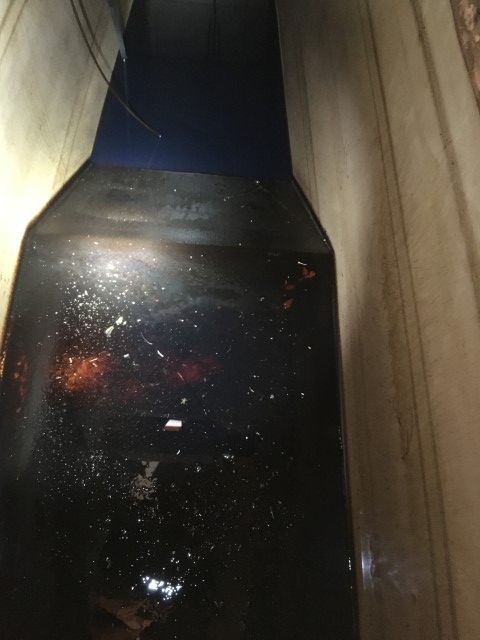
The “sludge” in the tank. The tank is an odd shape, it is not symmetrical and there are no baffles in it.
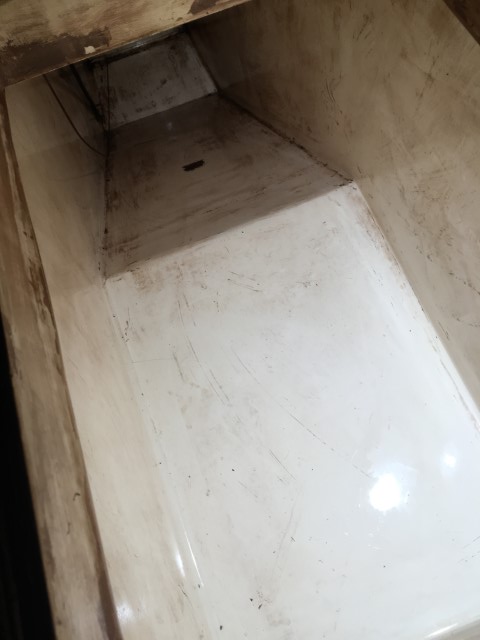
After a day of breathing fumes and getting rid of toxic waste rags and an old bed sheet used for cleaning. Looking down and aft into the cleaner tank.
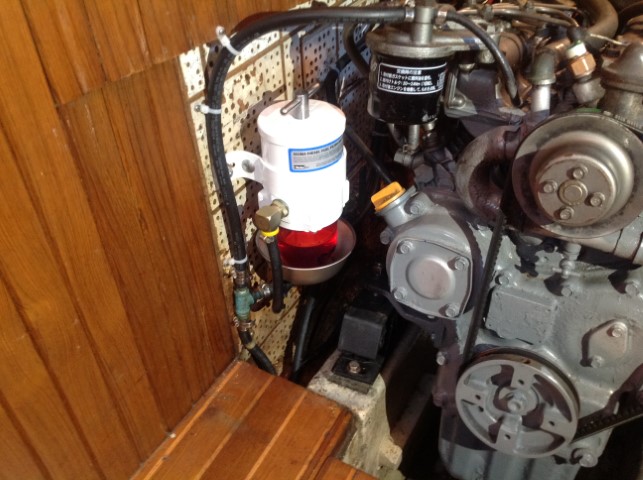
A happier and cleaner Racor filter in the engine room.
No idea what the cleaning interval of a fuel tank should be, probably less than every thirty or forty years.


 sailing casita
Leave a comment