
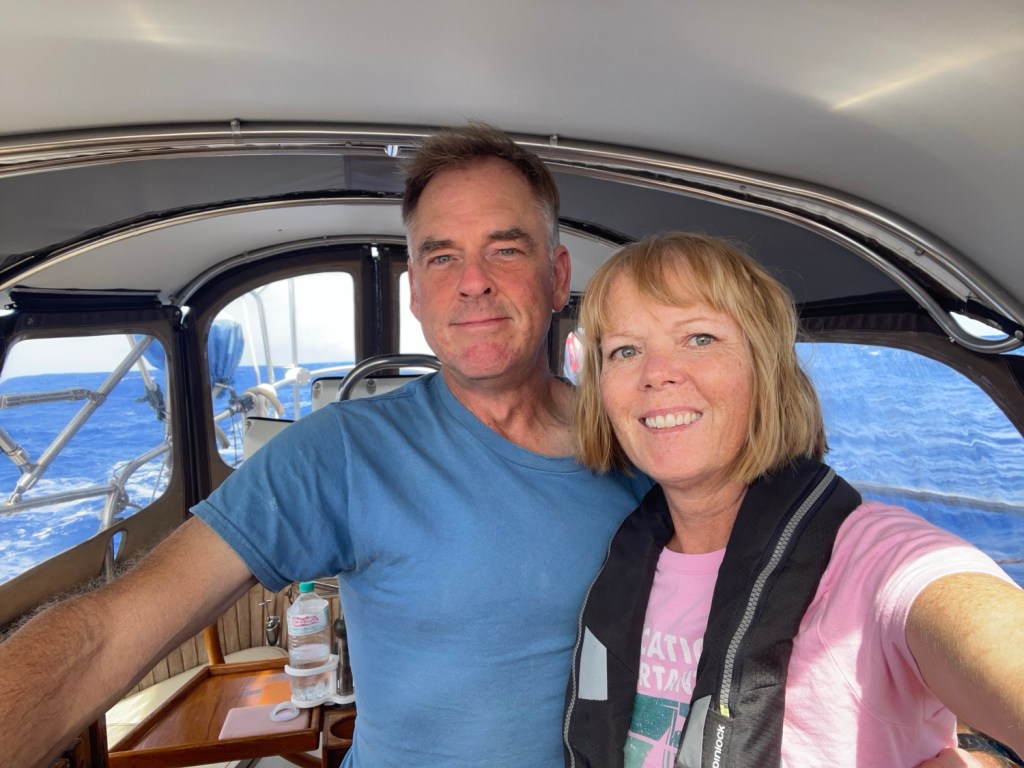
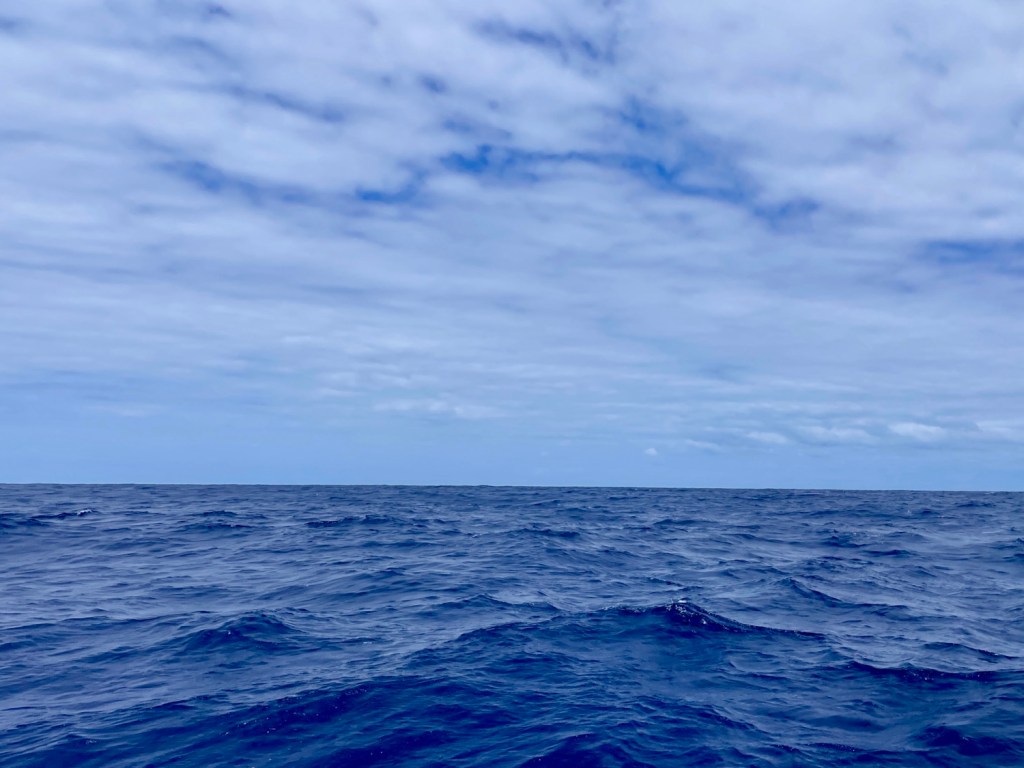
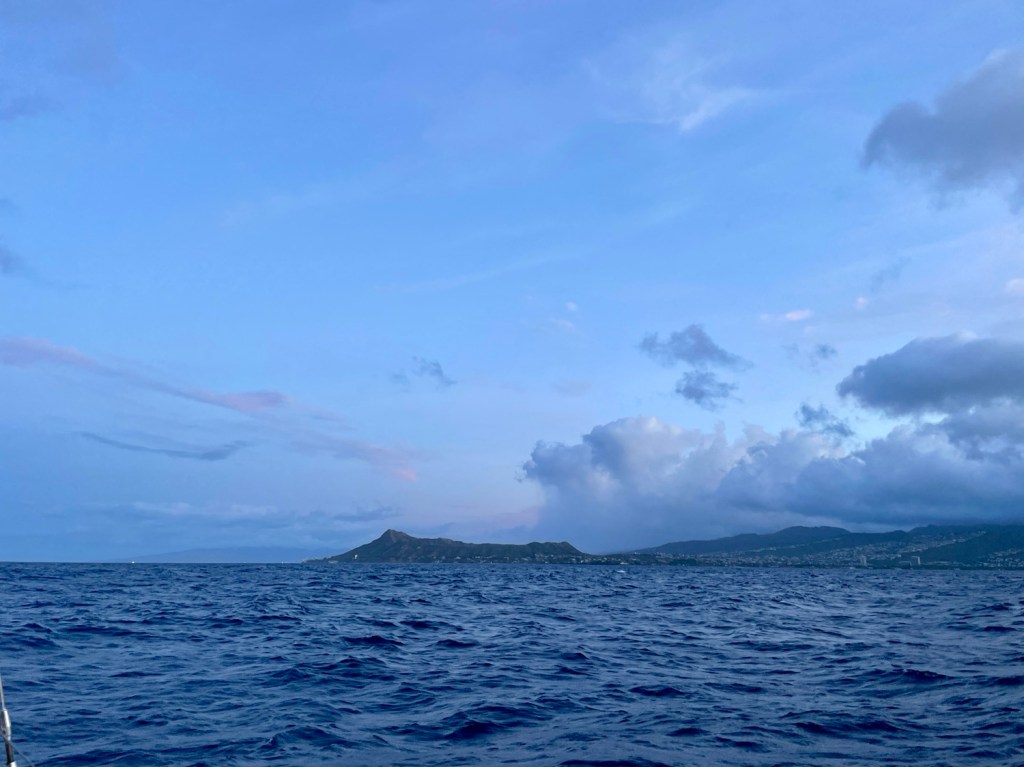
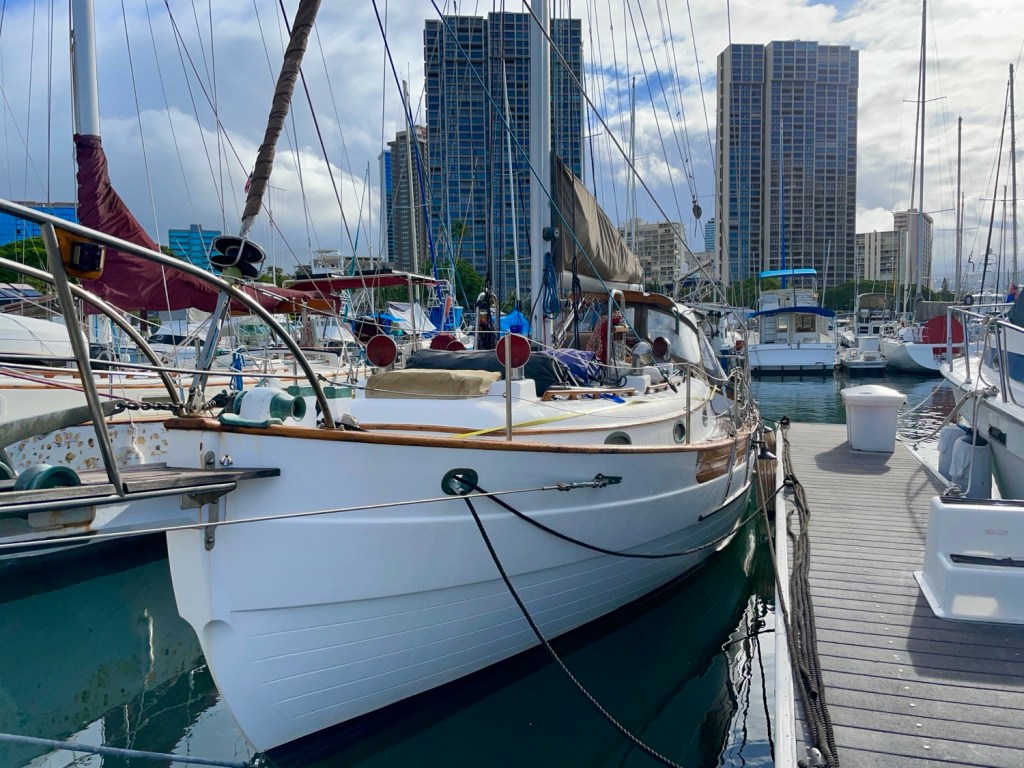
Well we did it, we sailed almost 3,000 nautical miles across the Pacific Ocean from Mexico to Hawaii in our little boat! Wow, it still doesn’t feel quite real that we are in Hawaii. I recall flying to Hawaii in the past and looking out the window of the airplane and seeing nothing but ocean for hours and hours. Now I think about that and it is very surreal to realize we crossed that huge empty expanse in Casita.
Here is a rundown of the trip by the numbers:
- Total miles sailed from La Paz to Honolulu: 2982 nautical miles/3431 statute miles
- Time underway: 22 days and 2.5 hours from anchor up in La Paz to tied up in Honolulu
- Average speed: 5.6 knots/6.5 mph
- Hours we used the motor: 42 (most of that was to get out of the Sea of Cortez and into the Pacific Ocean)
- Other vessels seen after leaving the Sea and before entering Hawaiian waters: 2
- Major gear failures: 0
- Injuries (other than various bruises): 0
- Near collisions: 1 (see end of post)
I’m trying to figure out how to convey our experience/what the trip felt like, but a lot of it is a blur. This is probably at least partly due to the fact that we were in a constant state of borderline sleep deprivation and physical exhaustion. I went through and added brief notes from most of the passage days to our PredictWind tracking page which you can find here: https://forecast.predictwind.com/tracking/display/SV_Casita/
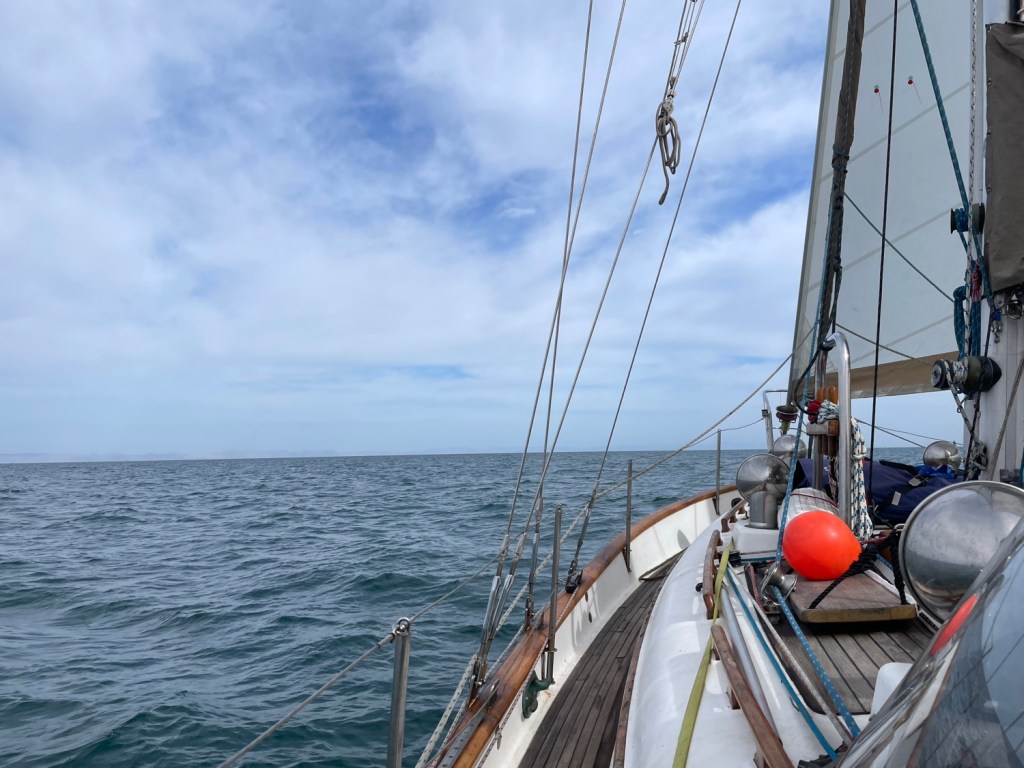
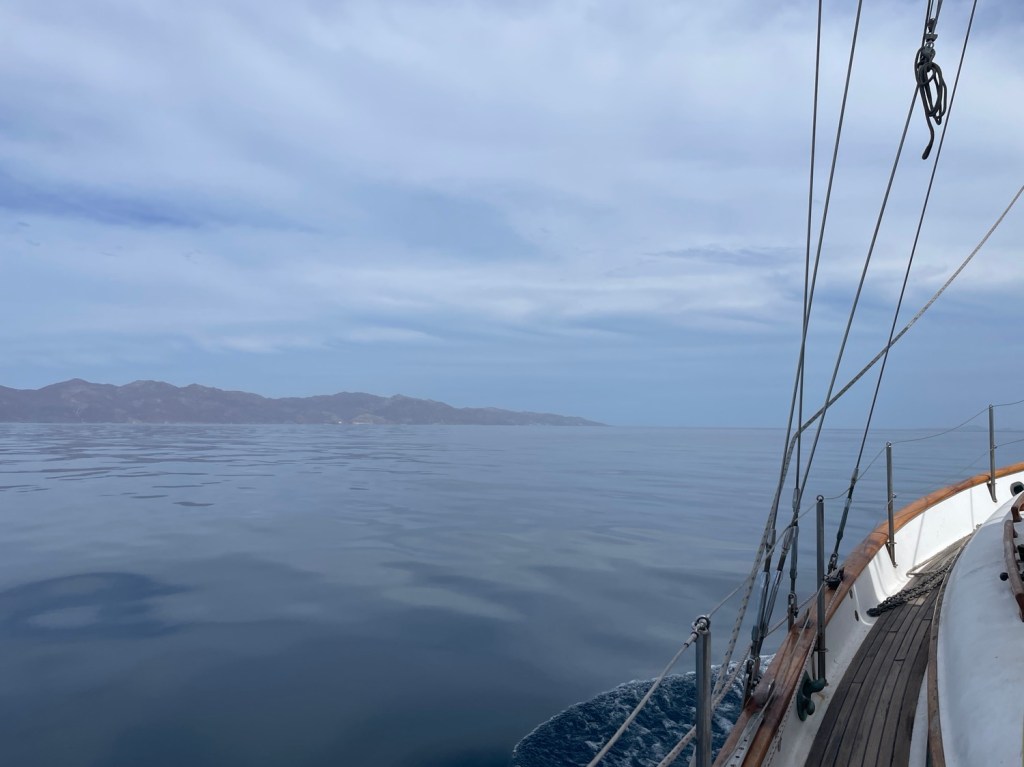
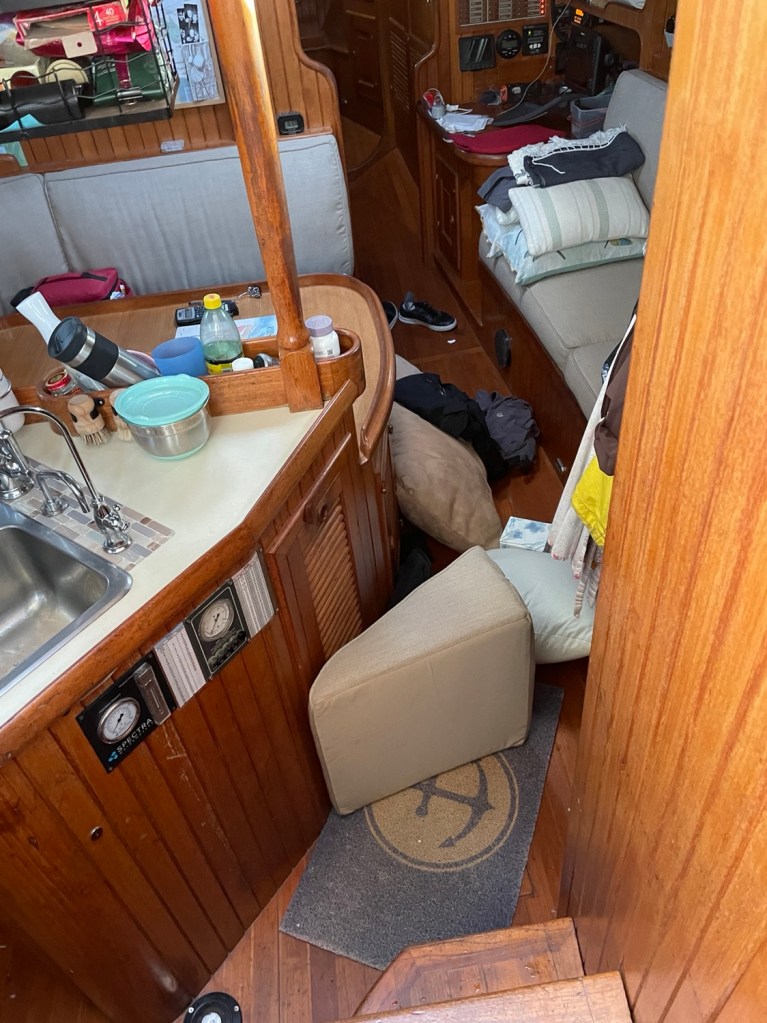
The first day after leaving La Paz was pretty easy, we were in the Sea of Cortez with light winds and just motored most of the time. The next couple of days as we left the Sea and entered the Pacific Ocean were the most challenging of the trip, mostly due to the conditions but also because it was a period of adjustment. As we rounded the southern tip of the Baja peninsula the wind increased dramatically as did the waves. The wind was forward of the beam (coming from ahead of us) and waves were crashing over the boat on a regular basis. Waves would come through gaps in our cockpit enclosure on the upwind side and at times we would heel/roll so far that the downwind rail would be in the water and water would flow into the cockpit from that side. Meanwhile, down below anything not adequately secured moved from the upwind (port) side to the downwind (starboard) side, but mostly this was just soft stuff like pillows and cushions. We then discovered that some hatch seals we replaced weren’t sealing that well so we had salt water splashing into the cabin and into the bathroom whenever a wave crashed over us. It was pretty disheartening how much of a mess everything became, but we were also too tired to care all that much. On a positive note, we were screaming along making really good time! Probably our fastest sailing ever 🙂
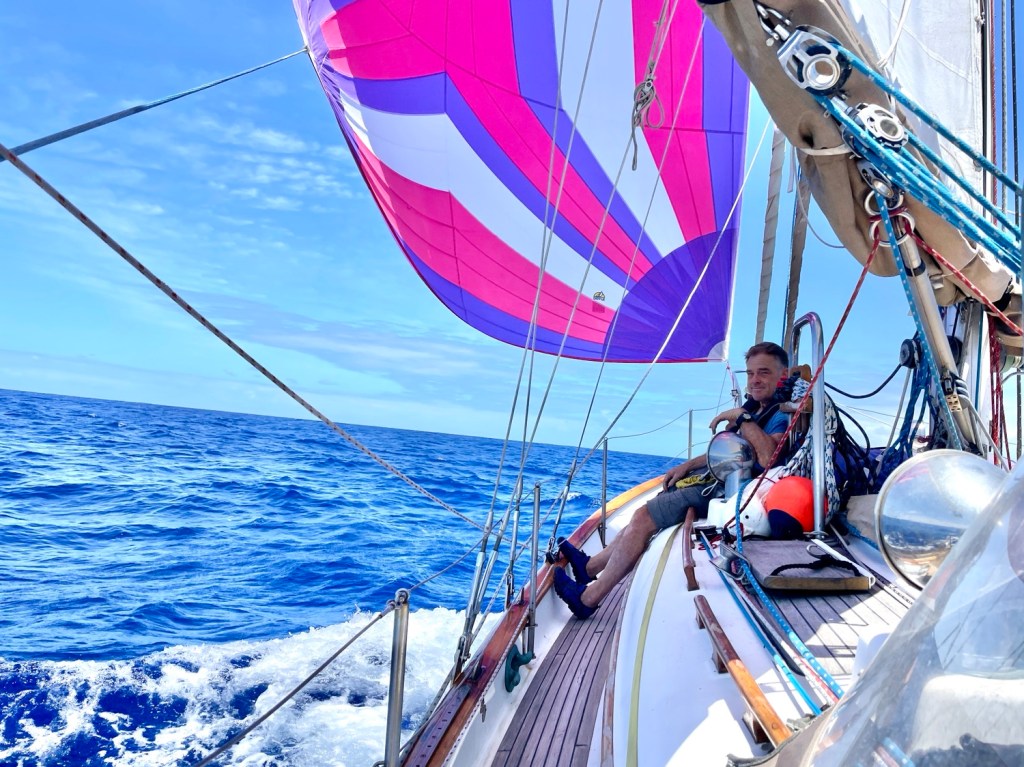
Things got easier after the first 3 or 4 days, conditions eased and we started to get into our rhythm. Before this trip our longest time at sea was 3 days so I was nervous about how I would handle the lack of solid sleep. Devon was in the Army so he has had to deal with watches and sleep deprivation before, but I didn’t know how well I would adapt. I was pleasantly surprised at how well I was able to adjust. It was always hard, but felt sustainable once I got used to it. One highlight of the trip was our daily check-ins on WhatsApp with other boats also traveling from Mexico to Hawaii. Even though we were all spread many miles across the ocean it was amazing to have a sense of comraderie.
For most of the trip our daily routine was for both of us to be up and about during the middle of the day and do 4 hour watches during the night. We started our watch schedule at 6pm so we would have an early dinner then Devon would stand watch from 6pm to 10pm, I would stand watch from 10pm to 2am, Devon would come back on from 2am to 6am, then I would take over at 6am until whenever Devon was up. I would make coffee around 8 or 9 (always a fun challenge since our coffee system is pour over). Once Devon was up we would spend a few hours together, maybe make breakfast but usually just have granola. Then I would go down below for an hour or so to nap or to just relax and disengage from the need to be alert. Once I was back in the cockpit Devon would then go below for some rest. Somewhere in there we would usually make lunch, though sometimes we just snacked or had some convenient leftovers. Around 4 I would usually start dinner so we could eat and clean up in time for watches to start at 6 o’clock. Devon did some of the cooking as well but I found I liked the break from needing to take care of the boat so I did the majority of it.
One thing that stands out for me is how exhausting the non-stop motion was. I had this idea that once we got away from the North American coast and we got into the trade winds that the waves would have a gentle rhythm, but other than a few hours here and there we mostly had steep waves so the motion was always rather jerky and rough. To do anything onboard required constant vigilance, always having a hand available to grab onto something and never leaving yourself unbraced for the next unexpected lurch. Cooking was particularly challenging, trying to not fall into the hot stove while also keeping the various ingredients and utensils from flying across the cabin was tough. As I write this I can feel my core muscles tightening up in response to the memories! Cleaning up afterwards and doing dishes was also difficult. Sometimes the boat would heel so much the dishwater would slosh out of the sink, and trying to use a dish drainer was pretty futile.
There was also almost nonstop noise. Sailing can be quite peaceful, but the water rushing past the boat is a constant source of noise, especially when going fast. Then there are the waves that come from a random direction and smack the side of the boat making a surprisingly solid “thunk” sound on the hull. Added into the mix were the sounds of the sails collapsing, flogging, and filling with a loud “snap” when the wind was inconsistent, plus all the random groans and creaks a boat makes when under sail. At times I found it was a little overstimulating.
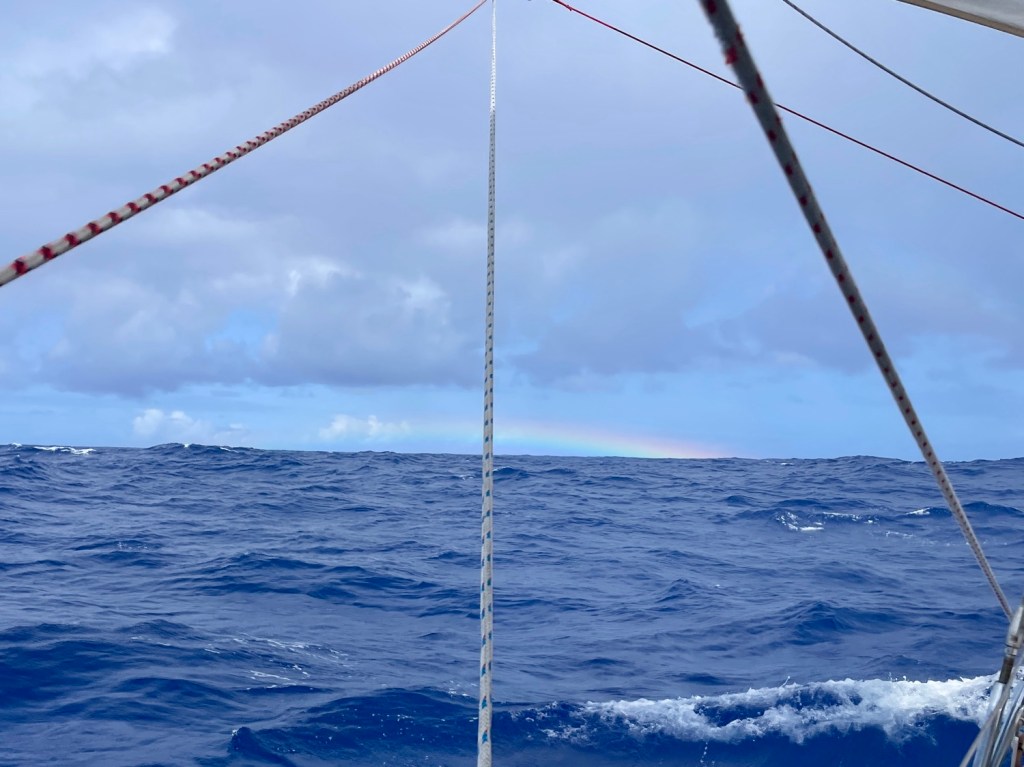
For many of the days it was cloudy, so the lack of Sun was felt by the crew and the house bank (the main battery bank) onboard. On a few occasions we “motor sailed”, we ran the motor in conjunction with the boat sailing to charge the batteries.
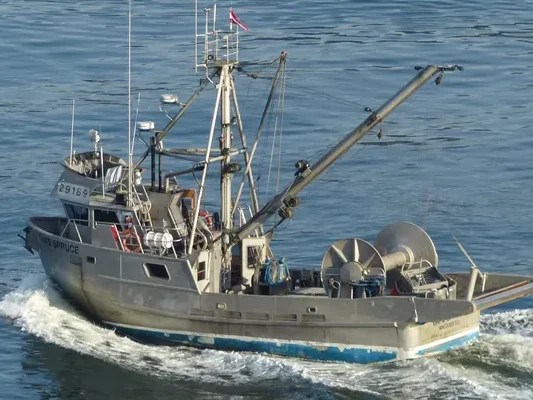
So the scariest moment of the whole passage came in the early morning on our last day at sea. It was shortly before 1am as we were approaching the channel between Oahu and Molokai. I could see two sets of lights ahead. There weren’t any vessels in the area transmitting on AIS (a system that uses GPS and VHF radio to transmit location, speed, heading to other vessels to prevent collisions at sea) and when I checked radar there were two returns at 3 miles and 6 miles away that seemed to be stationary or at least not moving very fast. The fact they were stationary, were well lit up, and not transmitting on AIS is pretty good evidence for the lights being two commercial fishing boats (fishing boats often do not transmit on AIS to avoid giving away their location to the competition). Just to confuse things I was seeing a 3rd light sometimes but it seemed to be a light on Oahu and not another vessel. The two fishing boats were pretty much dead ahead so I altered course to starboard and continued to monitor them visually and periodically on radar (radar uses a lot of power so I had it on standby, turning it on every few minutes) to make sure we would clear them safely.
At one point I realized I was again seeing 3 sets of lights but that something seemed strange: one of the lights appeared to be an object being illuminated, not a light itself. This was alarming, this meant something was way too close! I looked at the radar screen and saw the one boat still about 6 miles away but there was a weak return much closer, less than a mile away and almost straight ahead. I immediately altered course to starboard again and ran down below to grab the binoculars, tripping on my way down the stairs but fortunately just bruising my knee. With the binoculars I was able to confirm what I was seeing was a fishing vessel, one set of lights was the vessel’s lights but the other light was the boat’s work lights lighting up the net reel at the transom. It was really really close. At first it seemed that it would cross in front of us but then suddenly the boat appeared to be on a collision course with us. Distance and even travel direction are hard to determine in the dark on a moving/rolling boat but a look at the radar confirmed they were closing on us quite rapidly. At this point I couldn’t do anything to get out of their way, I couldn’t speed up or slow down in any meaningful way and I had already turned us at right angles to the fishing boat’s apparent course. I briefly thought about hailing them on the radio but I didn’t know the boat name and everything was happening too fast anyway. Before I could think of anything else to do they had altered course again and passed maybe a couple hundred feet behind us going very fast, probably at full power. I am bad at estimating distances but I could hear their engines, I could see the spray they kicked up in detail, and I felt their boat wake so they were very close. I think they had finished fishing where they were and had reeled in their nets and were rushing to their next fishing spot. Maybe they saw us at the last minute and veered around us or maybe they were aware of us the whole time and just thought nothing of cutting so close to us. They weren’t transmitting on AIS but I’m sure they were able to receive and should have seen us from many miles away, assuming they were paying attention. I looked at the radar screen after they passed behind us and even with it zoomed all the way in their little “blip” was almost dead center on top of us.
I was seriously freaked out and shaking when it was over and of course right away I started wondering what I could have done differently. The two things I think I should have done that I failed to do were to turn on all possible lights including spreader lights, deck level navigation lights, and steaming light (we had our tri-light on but it is at the top of the mast and maybe not that visible at close range), and to grab our spotlight to light up our sails and possibly flash across their bridge to get their attention. With how fast everything happened I still don’t think using the radio would have been effective, especially without being able to hail them by name.
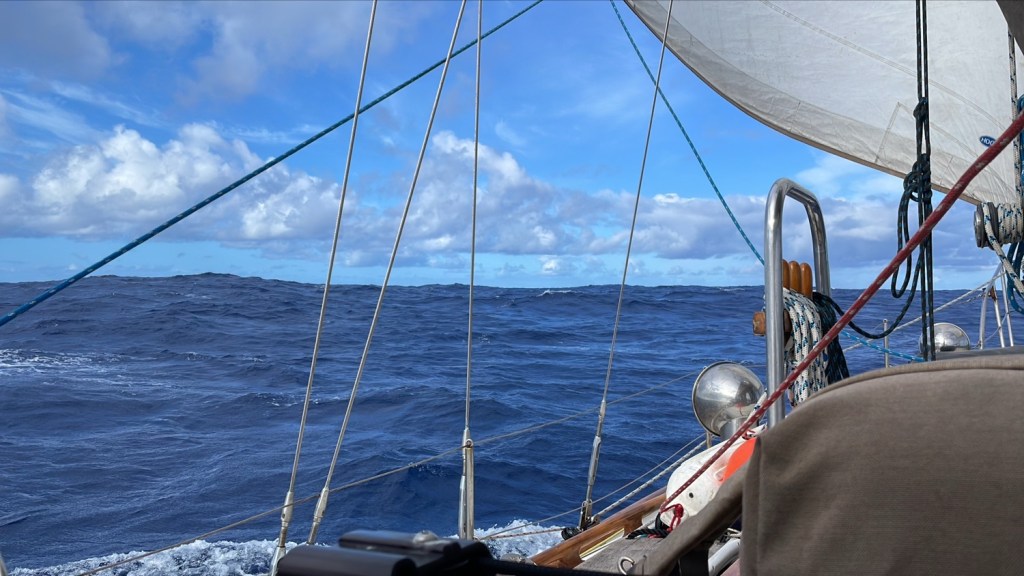
Well as they say, all’s well that ends well and we made it safely to Hawaii! On balance I think we were fortunate with the conditions we had on this trip. It wasn’t the peaceful trade winds sailing I had envisioned (maybe that doesn’t really exist), but we mostly had good winds allowing us to keep moving at a pretty fast speed and we didn’t have any severe weather. For that I am very grateful.





 sailing casita
Leave a reply to cynthiamynthia Cancel reply